Question:
Dear Fr. Fuentes,
Are traffic laws binding in conscience? What sin is committed? Can there be grave sin in this matter?
Answer:
1. Statement and arguments
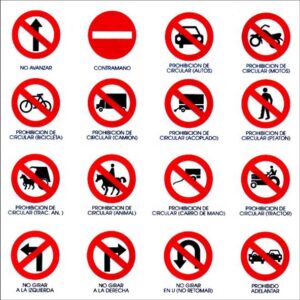
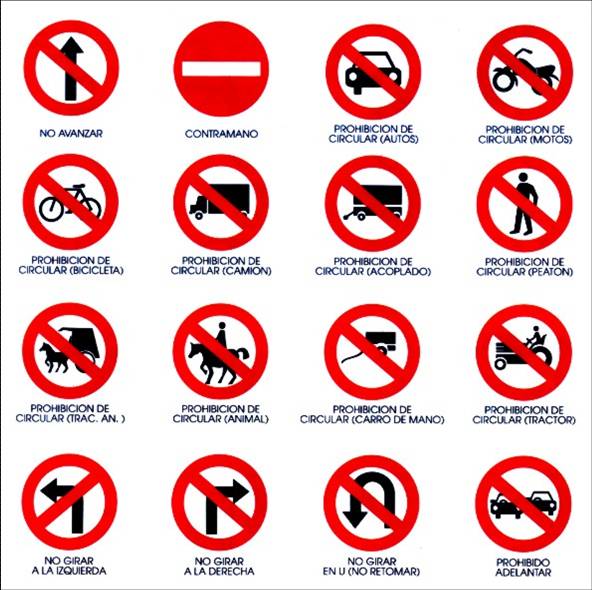
By this type of law, we mean regulations concerning speed limits, street directions, traffic lights, and pedestrian crossings. These laws govern not only drivers but also pedestrians (when and where to cross streets).
1) There are arguments in favor of a broader interpretation of this issue. The argument in favor of broadly considering these types of provisions can be summarized in one point: they constitute purely penal laws. Purely penal laws are defined as those that do not compel one to strictly comply with them, but only to accept the penalty if sanctioned. According to proponents of this theory, the legislator’s intent upon enacting the law would be: ‘If you do this, you do not sin, but you will be obligated to pay the fine’; or: ‘Do this or pay the fine: choose freely’.
2) On the other hand, some say that they are not merely criminal laws; therefore, they are binding in conscience.
2. Solution
1) Preliminary Notes. The discussion ultimately lies in what kind of laws they are. In truth, purely penal laws do not exist. Every law, insofar as it is a (just) law, is inherently binding in conscience. For human law is nothing other than a specification or reflection of natural law (ultimately, of eternal law) in those aspects where the latter is not entirely particular. It is, therefore, a reflection of the nature or essence of things; and thus, establishes a moral bond of respect for such essences. There are, however, certain directive norms that do not reach the category of laws; such norms may be merely penal, because they are not laws in the strict sense.
2) Traffic laws. In this case, the legislator establishes certain rules to prevent risks, accidents, and conflicts; that is, it mandates compliance with a rule aimed at promoting the common good of citizens. Now, the common good of society is the ultimate goal of society, according to natural law. Therefore, this legislation is a concrete application of that law and derives its binding nature from it. This means that they are true laws and obligations in conscience.
3) What type of obligation? The obligation depends on the necessity of its fulfillment for the achievement of the common good, and on the magnitude of the harm to the common good that its transgression implies. Thus, we have everything from minor imperfections to grave sins. Crossing a more or less deserted street on foot when the traffic light prohibits it merely sets a bad example, inducing others to do the same, and endangering traffic order; this is nothing more than an imperfection. Doing so on the highway, risking one’s life and endangering the lives of others, is more serious. Even more so, anything that means endangering one’s own life or the life of another (speeding, running red lights, negligence in paying attention, driving to the point of exhaustion, thus reducing the capacity to react to an unforeseen event; failing—through negligence—to have the minimum safety equipment—lights, brakes, etc.).
In this regard, Monsignor Sgreccia states: “With regard to the moral responsibility of each citizen, the moral obligation to respect the traffic code and all the rules that aim to defend one’s own life and that of others, physical integrity and property becomes evident. This is not about sacralizing civil laws, which, as we know, do not always and in every respect coincide with moral laws. But in this case, where the fundamental common good of life and the great values inherent in it (physical integrity, health, respect for material goods) are at stake, the obligation emerges by intrinsic force: it is a grave duty per se of citizens to observe the rules in their own conduct… This is not a matter of speculating about which articles of the traffic code can be transgressed without committing a grave sin and whether all infractions are sufficient for ‘mortal sin’… (rather) insufficient emphasis is placed on the formation of a conscience that is aware of the gravity of the duty to respect the rules and the spirit that animates them. We can, in this regard, recall the words of Pius XII: ‘The often dramatic consequences of traffic code violations confer upon it a character of extrinsic obligation that is more serious than is generally thought.’ Motorists cannot rely solely on their vigilance and skill to avoid accidents, but must also maintain a reasonable safety margin if they are to be able to avoid reckless acts and cope with unforeseen difficulties.”
The Catechism says, regarding two topics that are related to ours:
-‘Involuntary homicide is not morally imputable. But one is not free from serious fault when, without proportionate reasons, one has acted in such a way that death has followed, even without intention of causing it’ (no. 2269).
‘Those who, in a state of intoxication, or due to an immoderate fondness for speed, endanger the safety of others and their own on the roads, at sea or in the air, become seriously guilty’ (no. 2290).
Fr. Miguel A. Fuentes, IVE
Original Post: Here