Question:
Dear Father Fuentes: My doubt is about the morality of making a living from the profits that stock market investments can generate. I know a person, a practicing Catholic who receives the sacraments frequently, who invests in the stock market by buying and selling shares of different companies. This activity has proven to be much more profitable for him than his own trade, so much so that the profits he obtains from it he reinvests there. Until now, the risks of loss have been minimal or almost non-existent; it should be mentioned that he does not operate on his own account, but rather does so through a stockbroker who has been dedicated to this activity for years, which falls within his professional field and who therefore has ample experience with the ups and downs of stock market activity. In short, my question is to know if it is morally licit to live from the buying and selling of stocks and bonds, speculating on the stock market, even when there is assurance of minimal risk of loss, and when the profits from this can be used for the achievement of honest and good ends. Thank you for your attention and cordially greet you.
Answer:
Dear Reader:
In this regard, I transcribe what Fr. Antonio Royo Marín writes in his ‘Moral Theology for Lay People’ about the so-called ‘Stock Market Operations’ (cf. Royo Marín, Antonio, Moral Theology for Lay People, BAC, Madrid 1984, Volume I, nos. 733-736).
1. Notion.
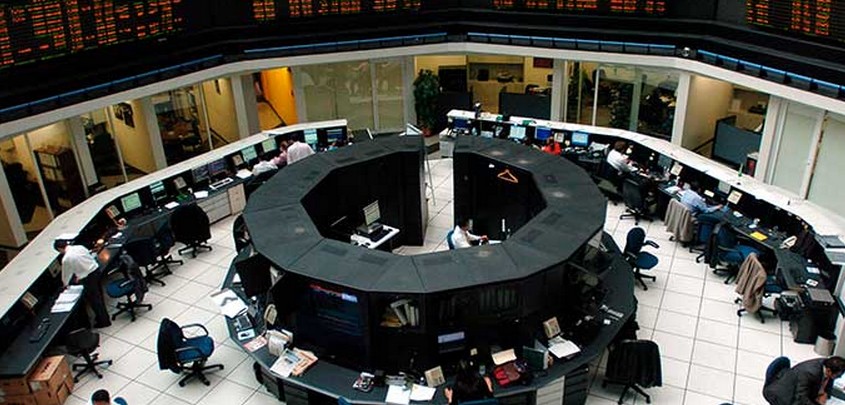
Stock market operations are those more or less random contracts that are carried out on the stock exchange or public contracting establishments, with the intervention, generally, of an intermediary (exchange and stock agent, trading broker, etc.).
Their object is: a) certain values that represent a credit, such as public debt securities, shares and bonds of the State, cities, industrial companies, etc.; b) certain goods, such as coffee, grains, cotton, wool, sugar, etc.
2. Division.
Stock market operations are numerous, but can be reduced to two main groups: cash transactions and future transactions.
1) Cash transactions are treated similarly to sales transactions and are governed by the same rules. They involve the purchase of securities representing credit (e.g., bonds, shares, or debentures) for cash (i.e., with cash and at the current market price), either to hold them and collect their annual income, or to resell them when their value increases.
2) Installment transactions take many different forms. The main ones are:
a) Fixed-term contracts (generally at the end of the month), where securities are purchased at a predetermined price (usually the current price on the day of settlement), but not for cash. Payment is mandatory on the agreed date, which is often called the settlement date. This is a sale with deferred delivery. The seller on credit sells because they expect the price to have fallen by the settlement date, and is therefore said to be betting on a lower price; while the buyer on credit buys because they believe the price will have risen by the settlement date, thus making a profit, and is therefore said to be betting on a higher price.
b) Forward trading by difference- since the main objective is often to profit from the difference between the current price and the price on the settlement date, the contracting parties frequently agree that neither the price nor the securities will be delivered, but only the difference to the buyer or seller, whichever is more advantageous. This transaction is called short selling or trading by difference.
c) A forward contract with a premium, in which a small amount is paid to the seller in advance on the contract date, with the buyer reserving the right to cancel it at the end of the term. If it is canceled, the advance amount is lost (forfeited premium); if the contract is fulfilled, that is, if it is actually carried out, the premium becomes part of the agreed price.
This premium transaction can be done in relation to the securities themselves (as in letter a above) or only to the differences (as in b). Another modality is the double option: the option is not to terminate or not the contract, but to double or not its value; option for the seller (very rare) or for the buyer; with or without a premium; with full settlement or by differences, etc.
d) Double transaction with repurchase agreement (commercial relationship). Securities are sold for cash at the current price, but with a mandatory repurchase agreement on the settlement date. This repurchase agreement can be sold at a higher price than the price received on the transaction date, and this difference is called a repurchase agreement; or at a lower price, and this difference is called a repurchase agreement. In the first case, the seller essentially borrows money; in the second, they lend securities for a price. All of this occurs until the settlement date.
3. Morality
As can be seen, stock market operations can easily be reduced to buying, selling, lending, or gambling. In this sense, and provided the conditions for the legality of those contracts are met, stock market operations are not inherently illegal or unfair. However, given their susceptibility to countless frauds and injustices, access to the stock market should be reserved exclusively for technicians or professionals of impeccable conduct and recognized moral character. In any case, the following rules must be observed:
a) In cash transactions, the laws of sale must be observed.
b) In those by differences, those of the purchase and sale and those of the bet.
c) In option and premium contracts, equality between the price and the right granted must be maintained.
d) Reports and deports are the most dangerous operations and the ones most prone to abuse. They could be permissible if the lending rules were scrupulously observed. However, since these rules are not usually observed, and frankly usurious interest rates are charged (e.g., 1 percent in fifteen days, which amounts to 24 percent annually), in practice they are immoral and illegal.
4. Unfair Speculation
Although the expression ‘stock market speculation’ can be used in a positive sense, as a synonym for intelligent calculations and fortunate predictions about the success of stock market transactions, it is most often used pejoratively, that is, as a synonym for the intrigues, frauds, and other unjust practices frequently carried out by unscrupulous people with corrupt consciences and immoral conduct to artificially raise or lower the price of securities (e.g., by spreading false rumors, promoting strikes, riots, or revolutions; simulating nonexistent sales, etc.). Needless to say, those who engage in these vile practices commit a grave injustice and are obligated to fully compensate for the damages caused and the profit that the victims could reasonably have obtained had they acted in a noble and honest manner. It is very easy to circumvent the human laws that prohibit these injustices; But certainly these common evildoers will not escape divine justice, which will fall inflexibly upon them at the final reckoning.
Applications: They certainly sin against justice and are obliged to make restitution:
a) Those who exercise an unfair monopoly by hoarding large numbers of assets to raise or lower their value more or less than what corresponds to their real value.
b) Those who, through simulated operations, in agreement with others or with their own employees, artificially increase or depress prices, until they obtain some real operation at an unfair price.
c) Those who spread false rumors about the prosperous or adverse state of any society, etc., or employ other frauds (e.g., false advertisements in newspapers, fictitious telegrams, etc.) to artificially raise or lower the price of securities for their own benefit and to the detriment of others.
d) Those who, without having spread these false rumors or employed other frauds, but knowing for certain that others have spread them, take advantage of the deception of the unwary to buy their securities at a higher or lower price than they actually deserve.
e) Those who carry out so many operations that they risk not being able to meet their commitments on time, which is equivalent to accepting fictitious obligations, to the detriment and harm of others.
f) Those who risk such a sum of money, exposing themselves to losing what is essential to pay creditors (against justice) or ruining their family (against piety and perhaps against justice).
(g) Those who, knowing that a law is about to be enacted (especially if they know this through state secrecy or professional privilege) that will cause values to rise or fall, buy or sell them before it is known to others in order to profit from that rise or fall before or after; because in this case, there is a lack of equality between both parties regarding the uncertainty of the transaction. As can be seen, stock market operations, especially those involving gambling, are fraught with danger. It is very difficult to always remain within the bounds of strict justice and irreproachable honesty. It would be desirable for civil legislation, which has been insufficient in this matter to date, to lay down the law on the guilty and punish with exemplary severity the frauds and injustices that frequently affect the whole of society, causing great harm to the common good. Above all, purely profit-driven operations should be prohibited for those who, detached from genuine commerce and with little regard for the common good, seek only personal gain through fictitious trade, which, far from fostering it, distorts the economic value of things and their fair determination. The famous Mechelen Social Code rightly expresses this desire when it states, among other things:
‘As regards transactions for difference and with a premium, when they do not constitute a means of investment or a means of acquiring securities to fulfill a term obligation, it seems that the moral damages that result from this exceed the advantages that some, rightly or wrongly, attribute to them’ (art. 130).
‘The actions of public authorities must strive to suppress usury and make it difficult for the notoriously inept public to access financial markets’ (art.132).
‘In commodity exchanges, the responsible authorities must take appropriate measures to keep away from the operations carried out in them those persons who are not called, by virtue of their profession, to intervene in said market’ (art.133).
Fr. Miguel A. Fuentes, IVE
Original Post: Here