Question:
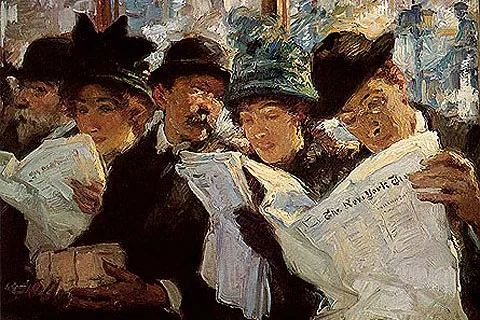
What are the rights and limits of modern journalism? What responsibility falls upon them when they distort the truth or disclose hidden truths? Is journalistic ‘sensationalism’ a sin? How should they repair the harm done?
Answer:
The mission of informing, in order to fulfill its important task, must respond to the demands proper to its nature. These are demands for truthfulness, prudence, and charity. When respect for any of these virtues is lacking, journalism undermines the common good, in addition to harming the private good of those directly affected.
Truthfulness above all, since it is a service to the truth. Journalism sins against truthfulness when it presents false news, when it exaggerates the magnitude of events, or when, on the contrary, it presents them in a biased, edited manner (presenting them, therefore, without rigor of truth). When the information contains false data or leads to error regarding the reputation or honesty of a person, it becomes slanderous, and it is a very grave sin due to the magnitude and reach that information has in our days. They sin against the eighth commandment which says: ‘You shall not bear false witness against your neighbor’ (Ex 20:16). The book of Proverbs mentions among ‘six things that the Lord hates’: ‘…a lying tongue,… a false witness who breathes out lies,… and one who sows discord among brothers’ (Prov 6:16). And Sirach states: ‘The sinner who meddles in discourse will be cursed, for he has destroyed many who were living in peace… Many have fallen by the edge of the sword, but not so many as have fallen because of the tongue’ (Sir 28:13, 18). Jesus Christ affirmed that lying is a diabolical work: ‘You are of your father the devil… for there is no truth in him. When he lies, he speaks according to his own nature, for he is a liar and the father of lies’ (Jn 8:44).
It thus becomes a destructive power, a sower of discord, a power that undermines trust among men and breaks the fabric of social relations and is, many times, a cause of despair for innocent people who cannot defend themselves with the same effectiveness with which they are attacked.The journalist is responsible for his actions both if he disseminates false information knowing its falsehood, and if he disseminates injurious information without certainty of its truthfulness. He cannot, for this, justify himself by saying that he simply ‘gathers testimony from authorized sources (?)’, or ‘echoes widely held opinions’, or refers responsibility ‘to the author of the statements’. The dissemination (that is, the fact that such news is spread) is the work and responsibility of the one who transmits it; an old saying goes: ‘he is a thief not only who steals, but also who holds the bag for him to put the stolen things into it.’ The obligations that fall upon one who acts in this way are those proper to any reparation in justice, and such reparation is not limited to the dissemination of the truth contrary to the slander but to the reparation of the damages caused by it, even if they were only foreseen (not directly intended) or foreseeable (not actually foreseen but of such a nature that any person in the profession should have foreseen them); and these, generally, are not limited to the loss of reputation, but can go further, affecting a person in their work relationships, their economic position, etc. Sometimes, the responsibility can reach terrible dimensions; suffice it to recall the notorious case of the French Government’s Minister of Labor, Robert Boulin, who took his own life on November 29, 1979, unable to bear the defamations about his person mercilessly disseminated by the French press.
What to say when the news disclosed is true but harmful to the reputation of some person? It is true that this is not slander. In any case, two different cases must be distinguished:
a) When the person is a public figure (politician, economist, professor, artist, etc.) and the faults in question may have an impact on their public function, the disclosure of these faults may be licit, if it is a matter of preventing others from relatively important harm. A necessary condition for this is that there be no animus damnificandi (intent to harm), that is, that it is not done with the intention of harming the person compromised by the information but that, on the contrary, the intention is directed towards procuring the common good, and the loss of false reputation is merely tolerated. Such is the case with the disclosure of public faults or those affecting public order in those individuals who would endanger the common good (a professor who professed corrupting ideas, a politician with a scandalous life or with intentions affecting the interests of the homeland, etc.). The public man (who freely chooses such a function with its attendant responsibilities) does not belong only to himself, but to the community before which he decides to assume responsibilities and, many times, upon which he shines as a model. It is this role, freely assumed or accepted, that imposes upon him grave duties that he cannot evade. On the other hand, when it is simply a matter of highlighting the scandalous life of famous people without any critical judgment or, worse still, presenting them as paradigmatic (as is often done with actors and actresses, when their licentious lives and customs are shown with great fanfare), the harm caused to society is very grave: it is an occasion of scandal (that is, that many depart from good conduct to follow the example of the ‘archetypes’ manufactured by this type of press).
b) When the person is a private individual or it concerns private faults of a public person (which, therefore, do not affect nor could affect the common good), although it would not be slander, it would be detraction, defamation, or backbiting, and would, in any case, undermine justice because the principle that the right to a good name is not eliminated even if it is based on a false reputation remains standing, at least as long as this does not result in harm to others. Therefore, as we have already said, when the reputation someone enjoys is not true, it can only be removed for an important, just, and proportionate cause. Another reason derives from the fact that information is, theoretically, a public service and therefore should only affect public matters. When a person has been deprived of their good name without such conditions being met, the only recourse is to repair the damages caused.
So far we have spoken of respect for truthfulness. The reasons of prudence and charity that should guide the dissemination of true news must also be taken into account. Politeness does not preclude courage. Even when revealing painful and necessary truths, the norms of charity must be observed, demonstrating that in disclosing the faults of others, it is not the persons who are attacked but the harm they may cause to the common good due to the function they occupy in society; and likewise, the dictates of prudence whose role it is to foresee the appropriate time and manner so that the ‘remedy is not worse than the disease’.
It would be good to remind all journalists of those words of John XXIII: ‘By working for the truth, you will also work for human fraternity. Because error and lies are what divide men; truth brings them together. Thus, by prudently choosing and objectively presenting the news, taking care to avoid as much as possible everything that feeds passions or bitter and malevolent polemics, exalting preferentially positive values, what is life, generous effort, desire for improvement, convergences of efforts towards the common good, it is in this way that union, concord, and true peace are favored’
Original Post: Here