Question
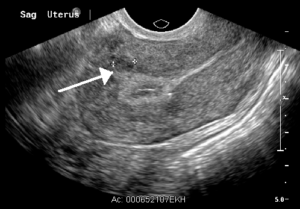
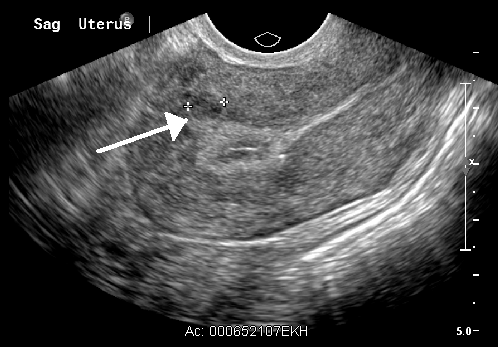
Dear Father, we have the following case: a woman has a pregnancy of a few weeks located outside the uterus. The same thing happened to her a few months ago, which resulted in a natural miscarriage. Now, according to the doctors, the same will occur, so they suggest terminating the pregnancy to at least avoid the risk to her health from severe hemorrhage. The woman is perplexed and asks for advice. The question is: Is what they propose illicit? Or should the woman allow the natural miscarriage to occur even with a serious risk to her health?
Answer
Dear Sir/Madam,
Regarding the problem of ectopic pregnancies (outside the natural place), I respond with what A. Peinador says (Moral Profesional, nº 652): ‘Concerning ectopic fetuses… it is never licit to extract the live ovum nor perform any incision that goes directly against the fetus… Scremin says on this topic: Regarding the morality of the common treatments for ectopic pregnancy when the fetus is not viable, it can be said that, if the rupture has already occurred and hemorrhage, even if small, is underway, it is licit to intervene to contain the hemorrhage, even if the fetus is alive and retains its connection to the placenta. The death of the fetus from an intervention whose therapeutic purpose is to stop the hemorrhage is an indirect consequence, and was not intended either as an end or as a means. The same must be said for ovarian pregnancy or pregnancy in the extremity of a rudimentary, atretic uterus. In any case, an expectant approach is required, which allows for the possibility of immediate action when indicated by the course of the pregnancy and possible complications.’
A. Royo Marín also explains in a similar manner (Teología moral para seglares, T.I, nº 565): ‘In the case of an ectopic or extrauterine gestation, the human fetus possesses the same natural rights as if it were placed in its natural site. Therefore, it is never licit, under any pretext, to kill it directly. The only thing that can be done is the so-called Wallace operation (this operation consists of transferring the ectopic fetus from the abnormal site where it is nested to its normal site in the uterus or womb so that it can achieve its normal development there. It has recently begun to be performed successfully, and with it, the life of both the mother and the child is well attended to), if the doctor’s skill allows for good results to be expected for the life of the child and the mother; or the so-called armed expectation (preferably in a surgical clinic or sanatorium where appropriate means can be used immediately), consisting of the immediate intervention of the doctor when the rupture of the fetal sac occurs (which puts the mother’s life in grave danger), because the fetus is then separated from its vital connections (extract it and baptize it immediately); or laparotomy, if the fetus is already viable and there is a grave danger for the mother if the gestation continues to term, because this case involves a simple acceleration of birth, which is licit with just cause. The removal of the ectopic fetus would only be licit when there is full certainty of its death (something quite difficult in practice), because then it is clear that one is not killing it.’
Fr. Miguel A. Fuentes, IVE
Original link: Here