Question:
What is the morality of the surgeries to change one’s gender?
Answer:
The problem raised revolves around so-called “transsexuality.” Regarding this matter, there are no explicit pronouncements of the Magisterium; only references can be made to the general teachings on human sexuality[1].
1. General elements of human sexuality
From a medical point of view, one must take into account what is termed:
- Chromosomal sex: this is the objective result of fertilization; every individual is born with a determined sex that can only be male (by the presence of a ‘Y’ chromosome) or female (by the absence of a ‘Y’ chromosome). It is also objectively proven that genetic sex determines the other biological components of sex. One is a man or a woman from the moment of conception.
- Gonadal sex: this is based on the characteristics of the sexual glands; males possess testicular tissue, and females possess ovarian tissue.
- Sex of the genital ducts: the Müllerian duct is proper to women; the Wolffian duct is proper to men.
- Phenotypic or genital sex: these are the apparent characteristics present at the level of the external genitalia. It is at this level that the social attribution of a person’s sex is made, according to the characteristics they show at birth.
In normal physical sexuality, there is harmony and concordance among the aforementioned components. Anomalies exist that determine a certain state of “intersexuality” when there is discordance among the genetic, gonadal, ductal, and phenotypic characteristics of sex. The principal anomalies are:
- Pseudohermaphroditism: this is discordance between the genital and glandular characteristics. It can be female pseudohermaphroditism (male genitalia with female glands, i.e., ovaries) or male pseudohermaphroditism (female genitalia with male glands, i.e., testes).
- True hermaphroditism: This is very rare and is characterized by the simultaneous presence of ovarian and testicular tissues. Various hypotheses also occur: that the individual presents a predominantly male phenotype, or a female one.
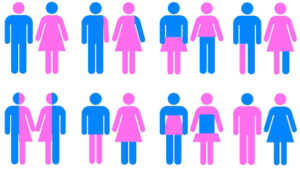
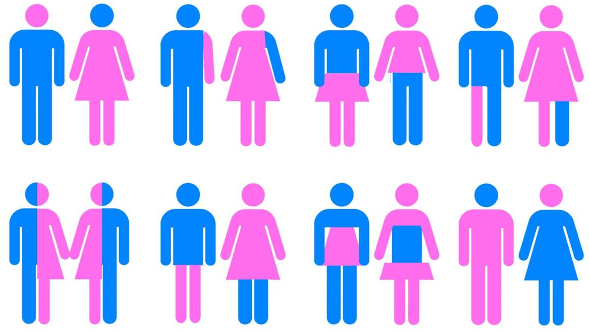
“Transsexualism” is something different: it designates the conflict between the physical sex in its aforementioned components and the “psychological tendency” that is “experienced” in the opposite direction. In the vast majority of cases, these are subjects of male physical sex who psychologically feel like women or tend to identify with the female sex. Opposite cases are rarer.
Transsexualism presents itself as a syndrome in which there exists a psychological drive, apparently primary (or at least arising in remote times), to belong to the sex opposite to the genetic, endocrine, and phenotypic sex; a drive that is accompanied by a psycho-sexual behavior of a type clearly opposite to that expected by the anatomical sex and that is associated with the obsessive desire to ‘free oneself’ from one’s own genital attributes and to acquire those of the opposite sex. It is thus distinguished from homosexuality and transvestism. In homosexuality, there is no desire to change sex but rather to have sexual relations with subjects of the same sex; in transvestism, there is likewise no desire to change sex but rather to dress in clothing of the opposite sex as a condition for achieving sexual excitation (but sexual relations are sought with subjects of the opposite sex).
Returning to transsexualism, it must be said that, from a scientific point of view, medical-surgical intervention (performed to adapt external physical appearances to psychological tendencies) does not overcome the conflict nor restore harmony with the new sex, but rather seems to aggravate the sense of frustration; the most perfect operation never truly accomplishes a genuine change of sex.
2. Morality of surgery to change one’s gender
Cases of sexual ambiguity. In the case of subjects who present some form of physical anomaly due to the co-presence of anatomical elements of both sexes (hermaphroditism, pseudohermaphroditism), surgical intervention has never raised moral doubts. The problem, in this order of things, concerns the direction that surgery should take (i.e., which sex should prevail and which should be eliminated). It must be said:
- When the external conformation is sufficiently defined and the patient is unaware of the discordance between their genital sex and their glandular and chromosomal sex (as in cases where only the doctor or specialist realizes it, for example, while performing hernia surgery): it is morally obligatory to keep this discordance hidden from the patient, because it is hardly corrigible and can lead to nothing but disturbance in the subject.
- When the ambiguity is also noticeable in the external genitalia and the parents (or the interested party themselves) request corrective surgery, one must take into account (to determine whether to privilege female or male characteristics): a) which intervention, from a technical point of view, has the greater chances of success; b) which sex achieves the greater harmony with the other elements of physical sex (gonadal, chromosomal); c) the future possibilities of performing the conjugal act (since this is the purpose of sex); d) the possibility of also obtaining fertility.
The alignment of genital sex with psychic sexual tendency (transsexualism, properly so-called). It is never licit, even when the irreversibility of the psychic problem is genuine (as some maintain), i.e., when it is impossible to treat the psychological problem of the person who ‘feels’ themselves to be of the other sex. This is not any kind of ‘rectification’ of sex but simply a castration, sterilization, mutilation, or deprivation of a true sexual function that is, in itself, entirely healthy; the problem is psychological in nature. Moreover, there is no proper ‘change of sex,’ for neither gonadal nor chromosomal sex is changed; one merely introduces a new dissonance between, on the one hand, gonadal and chromosomal sex and, on the other hand, psychic and—now—external genital sex. This intervention cannot be considered a therapeutic act, for one is operating on a part that is not physically diseased.
Fr. Miguel A. Fuentes, IVE
[1] I base myself entirely on Sgreccia, E., Manuale di Bioetica, Vita e Pensiero, Milan 1988, 373–398.
Original Post: Here